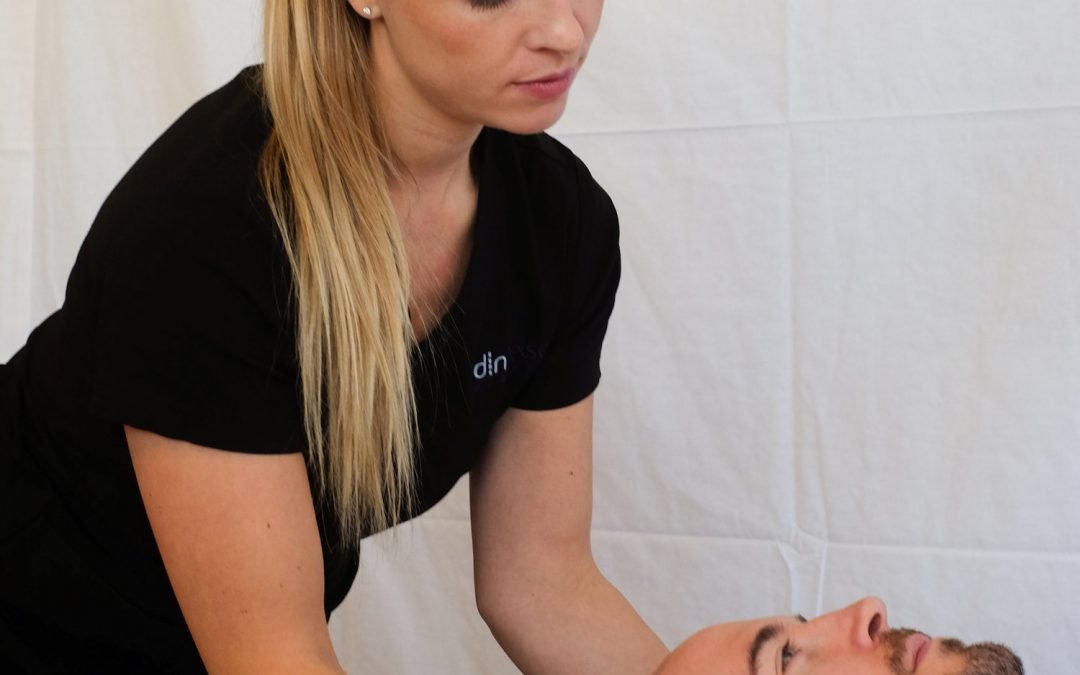
Hey everybody this is Dr. Jay coming to you from Miami, Florida. We are here at Southeast Regional! I’m here with my good friend Mr. Brad Cost, CEO of Infinedi.
Brad and Infinedi are strategic partners with us in the mid-atlantic and all across the nation. You’re a clearinghouse but really what you are is a data and analytics company. You’ve been helping us identify where third-party payers are not paying doctors correctly.
How important is this to not only the future of chiropractic but to individual chiropractors?
You know Jay, we could stop and talk to any doctor here and one of their #1 problems they’ll tell us is “I’m not getting paid right.”
You and I know from the research that we’ve done that this is occurring all across the United States. We’ve gotta change that.
We’ve developed the technology to do that, and we’ve tested it in Jay’s area, looking for where we’re seeing bundling, where we’re seeing low payments, missed payments, etc. Maybe the payer doesn’t even know it. We have the technology today to do it.
The provider needs to get paid for the service they’re providing and the value they’re delivering.
At the end of the day, it’s virtually impossible for individual doctors to scroll through their EOBs or have their staff review their EOBs and identify small variations in payments that ultimately add up to a lot of money.
We would never be able to identify payer issues without big data and technology delivered by Infinedi.
So for all of you out there that are using a clearinghouse, time to think about this in a different way, a different strategy. Our ability to leverage Big Data collectively with Infinedi allows us to identify payer abuse and help doctors get paid.
If you have any questions, please feel free to reach out to me at [email protected] and also check out Infinedi. Brad Cost at [email protected]. Any questions that you have let one of us know and we’ll be glad to help you.
In Part 1, we talked about the difference between patient loyalty and patient satisfaction. Patient satisfaction is fool’s gold. What we want is loyal patients. How we measure loyalty with your patients is called the Net Promoter Score. If you’ve not seen that video or you don’t remember please go back and watch.
In Part 2, we talked about the importance of highly satisfied employees to drive highly satisfied or loyal patients. So if you don’t remember, we talked about measuring your level your team’s level of engagement through what’s called the Q12. The Q12 was developed by Gallup (they know a thing or two about polling!). If you’ve not done this yet or if you’ve not yet seen this video please go back and watch.
It’s really really important that you deliver the Q12 to your employees to find out their level of engagement. Once you’ve determined that level of engagement, it’s really important to have regular one-on-one meetings with your team.
This is the opportunity to really connect with them, coach them and support them and at the end of the day what you’re attempting to do is ensure that they: 1. Know their role 2. Own their role 3. Drive through others 4. Execute
What’s really interesting is that both Gallup and Press Ganey – the largest patient satisfaction survey group in the world – looked at all the key variables around patient satisfaction and loyalty. And what they found is that the #1 variable that drove high levels of satisfaction and loyalty was how well the team worked together to ensure the needs of the patients were being met.
So having a strong team, making sure they know the role, they own the role and they can drive results through each other to execute whatever tasks are ahead of them to drive remarkable results for their patients is really critically important. That’s what you’re trying to get to when you have your regular one-on-ones with your team.
And then lastly, when we’re talking about truly driving results to create loyal patients, you’ve already surveyed your current patient base, you know what your Net Promoter Score is, you’ve now surveyed your employees, you know what their level of engagement is, you’re working with them through the regular one-on-one meetings to drive a higher engaged team.
Now you’re ready to really deliver remarkable results to your patients.
There are four questions that you always want to be asking with your team: 1. Who is your customer? 2. What do you know about them? 3. How do you create a personal and emotional connection with them? 4. How do you wow them?
This is really simply done by regular discussions that you’re having with your teams around driving remarkable results and remarkable experiences for your patients.
Now we as chiropractors we get amazing results. We get great clinical outcomes, but what can we do on the total service experience to really wow them?
And that’s where you get to have fun with your team! There’s all kinds of ideas that come forth when you have these meetings with your teams, and great ideas come forth in order to create remarkable experiences for your patients and ultimately drive high levels of patient loyalty.
– Improving Patient Loyalty –
So remember, understand the importance of the Net Promoter Score, understand the importance of surveying your own team to get Q12 results, understand the importance of regular one-on-ones in order to drive results through your team, and lastly making sure that you understand who your customer is. How do you create a strong personal emotional connection with them? And how do you wow them?
Feel free to reach out to me if you have any questions at [email protected].
Hey everybody this is Dr. Jay Greenstein coming to you from Cabo San Lucas Mexico!
I am super excited because we are closing in on FCA Southeast Regional in Miami, Florida!
The reason why I’m so excited about this conference is because we are rolling out a completely new track:
The Practice of the Future: Technology and Chiropractic
We’re going to be hearing from some of the best and most highly-acclaimed leading experts in chiropractic and technology on the planet!
We have multiple tracks that are clinical in nature, that are business in nature, documentation, ethics. We’re going to cover all of the important topics with Chiropractic and Technology for your practice in the future.
So don’t miss FCA Southeast Regional! It’s going to be an amazing event – amazing speakers and colleagues that will be present so make sure you get there. FCA Southeast Regional June 20-23. See you there!
Last post, we talked about the importance of patient loyalty and the difference between loyalty and patient satisfaction.
Patient satisfaction is fool’s gold, what you want is patient loyalty.
You measure patient loyalty through the Net Promoter Score. [If you didn’t get a chance to see the previous video, click here!]
So how do we improve our Net Promoter Score?
It is a three step process. Gallup and Press Ganey, the largest Hospital-based patient satisfaction organizations in the world, both surveyed millions of patients and here’s what they found:
The #1 predictor to improve patient satisfaction and loyalty is how well the staff worked together as a team.
What drives a great employee team? Employee engagement.
How do you measure employee engagement? Something called the Q12.
The Q 12 was developed also by Gallup to identify the level of engagement of your team. So use the Q 12 as a way to measure your employees engagement level.
Go to Google, download the Q12. Put it into SurveyMonkey. Ask your team for an anonymous but honest responses to the Q12 survey.
Once you’ve got all the responses aggregated, then you’re gonna follow the next steps coming soon in the next post.
Improving patient loyalty is a journey, and it’s a fun one! So make sure that you take the steps poll your patients with the Net Promoter Score, poll your employees with the Q12, and you will be poised to improve both employee engagement and patient loyalty over time.
What is the difference between Patient Satisfaction and Patient Loyalty?
Are they the same are they different? They are, in fact, different.
Patient satisfaction is fool’s gold.
Patient loyalty is really where you want to be.
Now mathematically, there’s actually a difference. The science says there’s a difference. And how do we know that difference? By questioning your patients.
Survey your patients on what’s called the Net Promoter Score.
What is a Net Promoter Score?
It is asking your patients one simple question: “How likely are you to refer a friend or family member to my practice?”
The people that give you nine and tens are promoters.
The people give you six through zeros are detractors.
The seven or eights, those are the satisfied people but not necessarily the loyal ones.
Your Net Promoter Score is the percentage of people that give you nine and tens minus the percentage of people that give you zero through six.
A Net Promoter Score or 50 or above is considered excellent.
Why does this matter?
A satisfied patient could come to your practice and be satisfied but then leave for the competition down the street or leave for some other alternative in health care.
A loyal patient is the one that’s literally singing your praises, they’re a raving fan, they’re more likely to return, and they’re also more likely to drive more people into your practice for greater impact.
So understanding the difference between satisfaction or loyalty is really really key.
Now you know how to measure it. How do you measure it with your patient base?
I’m going to give you one simple easy trick:
Go to Survey Monkey, make sure you enter that question “how likely are you to refer a friend or family member to my practice?” Do a Likert scale from 0 to 10, and then blast it out to all of your patients in an email blast. That’s going to give you your benchmark score.
Our next post will teach you how to increase patient loyalty and improve your Net Promoter Score.
But first, understanding Net Promoter Score in loyalty and making sure that you send out that initial email through Survey Monkey and getting your Net Promoter Score is the first step.
So we will see you next time – make sure you do those steps!
As we explore the dimensions of leadership and management, I plan to touch on many subjects. My approach in each of this series of articles is going to be deliberate and organized so you can refer back to them and understand them in the broader context of building a strong, healthy and successful practice.
Last month, we reviewed Jim Collins’ definition of Level 5 Leadership (L5) because, quite frankly success starts with you. There are so many more concepts in his book “Good to Great” that it is a must read. I’m hoping in the last month or so, you’ve done some homework and read the book.
Today, I want to take you on a broader step to looking at your practice from 50,000 feet and assessing some of the key elements that you need in order to get your practice to your perfect place. I recently attended an entrepreneurial certification class, the Entrepreneurial Operating System (EOS). EOS was developed by the business author and real estate entrepreneur, Gino Wickman. He developed this system because he saw very similar weakness in businesses across all verticals and knew he could make a difference by simplifying the core elements of a great business. Now, he will be the first to tell you that these elements only work if (1) the product or service has high quality and (2) there is a significant market demand for these services. I think it’s safe to say that us DC’s can “check that box”! The reason I wanted to complete this course was because I saw weaknesses in my own business that could be improved upon. No business is everperfect, and so “Kaizenovation® – continuous improvement through innovation” – is something we always work towards.
Now, let’s get to the components of the EOS. There are six components:
1. Vision
2. People
3. Data
4. Process
5. Issues
6. Traction
This month we will start with Vision. When I have a discussion with clients about vision, I always include three other elements: Mission, Values, and Culture.
Vision defines the way an organization or enterprise will look in the future. Vision is a long-term view, describing how the organization would like the world to be in which it operates. For example, a charity working with the poor might have a vision statement which reads “A World without Poverty.” Does your practice have a vision statement?
Mission defines the fundamental purpose of an organization or an enterprise, succinctly describing why it exists and what it does to achieve its vision. A mission statement provides details of what is done and answers the question: “What and how we do what we do?” Does your practice have a mission statement?
Values are beliefs that are shared among the stakeholders of an organization. Values drive an organization’s culture and priorities and provide a framework in which decisions are made. Honesty, teamwork, compassion all are examples of values. There is a critical need for alignment between personal values and organizational values because when there is misalignment, bad things usually happen. When there is strong alignment, your potential increases significantly. Does your practice have defined values that are exemplified in the behavior of each person in the practice?
Corporate Culture as defined by BusinessDictionary.com has probably the best definition I have seen, and it states:
Corporate culture is “the values and behaviors that contribute to the unique social and psychological environment of an organization. Organizational culture is the sum total of an organization’s past and current assumptions, experiences, philosophy, and values that hold it together, and is expressed in its self-image, inner workings, interactions with the outside world, and future expectations…
…Also called corporate culture, it manifests in (1) the ways the organization conducts its business, treats its employees, customers, and the wider community, (2) the extent to which autonomy and freedom is allowed in decision making, developing new ideas, and personal expression, (3) how power and information flow through its hierarchy, and (4) the strength of employee commitment towards collective objectives…
…It affects the organization’s productivity and performance, and provides guidelines on customer care and service; product quality and safety; attendance and punctuality; and concern for the environment…While there are many common elements in the large organizations of any country, organizational culture is unique for every organization and one of the hardest things to change.”
So, if the answer is “no” to any and/or all of these questions, there is work to be done, but more importantly, there is great opportunity. So how do you go about creating this foundational content for your practice? Here’s an novel idea…Take time to work “on” the business instead of “in” the business. To do that, it takes some time to set aside to meet with your whole staff. You probably need two hours to get through at least the first round of creating this content. Here are the 12 steps to take during that meeting:
1. Schedule a two hour meeting. Ensure you have paper and pens for everyone, flip chart paper that can be torn off and placed on an office wall (and/or a dry erase board), and markers (dry erase markers) with which to write.
2. One week prior to the meeting, provide an agenda to your team. Tell them, the purpose of the two hours will be to build out definitions of the practice’s vision, mission, values and ideal culture. Give them the above definitions to read. Further, explain the purpose of doing this work – to create a more harmonious workplace that achieves great things for its patients, its employees, the practice and the community. Most employees can rally around that. If they can’t, you may have “the wrong person on the bus.” (Note: “People” article coming next).
3. The day of the meeting, start the meeting on time. At the beginning of the meeting, re-state the purpose and the agenda. Then hand each person a pad of paper and a pen.
4. Read the “vision” definition and ask each person to write their definition on their pad of paper.
5. Once completed go around the room and have each person read their vision statement out load. Never be critical of their input, but you can provide direction if they are off base (e.g. they are really writing a mission statement when it should be a vision statement). While each person is reading, one person should be writing the statements on the chart/board.
6. After each person has spoken and any refinements to their individual ideas get completed, you should have all of your staff’s vision statement for everyone to see on the chart/board.
7. Facilitate a discussion on what each person likes and/or dislikes about the wording and work to create one common, complete and descriptive vision statement that is signature to your practice and your people.
8. Repeat the same exact step for your mission statement.
9. Once you’ve completed your mission statement, the next step is to come up with 5-7 core values. So, ask your staff to just write down on their pad of paper the words that come to mind that exemplify what the practice values should be, not necessarily what they are. (Note: You can certainly have a discussion after you’ve decided on what your core values need to be and the discrepancy with what they appear to be at the current time. That’s a healthy discussion to have but each person must be open to feedback (especially the doctor!) so that real change can take place for the betterment of all involved.).
10. Once every person has come up with their 5-7 core values, go through the same process of each person reading them aloud and putting them on them on the chart/board for everyone to see. Once you have all the words up for everyone to see, again, have a discussion about what the most important values are for your practice. Finalize the 5-7 most important and then DEFINE them, so that you are clear as to the meaning of the word. For instance the word “growth” can mean many things – practice growth, financial growth, personal growth, etc…So be clear so that your behaviors can model your values.
11. Next, you run through the same exercise related to the practice’s ideal culture. It could either be a word, a phrase or a sentence that describes the practice’s ideal culture. Then, after you’ve completed the process, finalize what you want the ideal culture to be in the practice by getting consensus from every team member in the meeting.
12. It’s critically important that you document your final vision, mission, values and culture, and that you have it posted for, at the very least, your employees to see regularly. Sometimes practices may want to clearly state their foundational content for their patients to see. That’s an individual decision but I can’t express enough how important it is for this information to be front and center for your team!
Lastly, I want you to realize that you may have to go through several renditions of the above until you get your perfect fit for each element. That’s ok, in fact that’s not just normal, but preferable. We’ve changed ours many times over and we think after 18 years we have it perfect.
You may be reading this article thinking or saying, “I have bigger fish to fry”… “My new patients are low”… “My costs are skyrocketing”… “I just lost my office manager”… “My receptionist was stealing from me”… “I can’t get my claims paid” … etc, etc, etc…
Trust me, I’ve been there – with every single one of the above issues and then some. But those are symptoms of the larger problem (sound familiar? i.e., your ROF with your patients?!). It’s critical that you spend the time to create intellectual alignment first and foremost by building out this foundational content. It provides the framework and context for every single behavior and action that takes place in your practice moving forward. Two hours can go a long way to ensuring you’ve built the right foundation so that once you have the “right people in the right seat on the bus (next edition), the practice can reach its potential! Good luck and let me know how it’s going!
The Chiropractic Summit and it’s partners put together an Opioid Crisis Toolkit. This FREE toolkit was created for you to use in your community. The resources included can help you easily spread the word about the opioid crisis to not only your patients, but other doctors in your area.
CEO of Sport and Spine Rehab and Kaizenovation Advisers, Dr. Jay Greenstein, sat down last week with the Fox Medical team to discuss the events surrounding the tragic death of model, Katie May.
Summary of Video:
Katie May suffered from a stroke, caused by an arterial dissection. Before the stroke, she saw her chiropractor, which led the coroner to decide that the chiropractic adjustment is what led to her death.
The question that remains on many people’s minds, however, is did the chiropractic adjustment really cause the stroke? It’s possible, however, there is really no way to tell for sure. We simply do not know all of the facts. What we do know, however, is that there is a lot of evidence stating that the likelihood of a person suffering from an arterial dissection following a neck adjustment is extremely rare. In fact, studies show that in general, adjustments do not place enough strain on the vertebral artery to even cause a tear. (1)
So what else could have happened to cause this stroke?
It’s possible that (1) the fall could have caused the arterial dissection, (2) the treating chiropractor missed the early warning signs, and (3) the chiropractor decided to adjust her neck which in the end could have caused her to suffer from a stroke. It’s possible that this tragic event could have been avoided had the early warning signs been caught.
The facts around this tragic event highlight one point in particular: The early warning signs of stroke are likely being missed. In one study, researchers from John Hopkins found that over 13% of people who presented with either a stroke or the early warning signs of a stroke at the ER were being missed (2).
What do we need to do as healthcare providers and/or patients?
As healthcare providers, we need to be more diligent about how we evaluate our patients.
As patients, we need to be more diligent about sharing all of the signs and symptoms and history with doctors so that they can make an appropriate diagnosis.
What should you say to your chiropractor or healthcare provider next time you see them?
Ask what evidence there is to back up their recommended course of treatment.
Ask about the risks associated with their recommended course of treatment.
If you are watching the Olympics, then you have probably seen some great things happen every night.
The other night, Michael Phelps, without question the best swimmer and possibly the best Olympic athlete of all time, exacted a touch of revenge on a loss in the 200-m butterfly from 4 years ago in London. In that race, he was out touched at the wall by Chad le Clos from South Africa and it left a particularly bad taste in his mouth. The reason he wanted the revenge is not merely because he lost that race 4 years ago, but rather because he felt that he didn’t train well enough for the 2012 Olympics. As a result, he unretired, trained harder and better, and he came back this year ready to go to win more golds and specifically win the 200-m butterfly. The attached picture of Phelps and le Clos shows it all, and it reminds me of a quote that I read on Twitter one time:
Winners focus on winning. Losers focus on winners.