What’s up Kaizenovators, happy Tuesday Two Minute Drill. When I was a kid, my parents had a garden in the backyard. We grew tomatoes, cucumbers, corn, and all kinds of stuff. I had to be the one responsible for doing all the weeding in that garden which brings Today’s topic of conversation, weeding.
I’ve Got to be Creative
I hated doing the weeding. It was hot. It was humid. There were lots of bugs. I didn’t like pulling weeds as opposed to running around the neighborhood, riding my bike, or throwing a football. I have weeding PTSD, I hate weeding. As an adult, I refuse to do any weeding. Now the result of that is my backyard. There are weeds everywhere back there. It’s a disaster area.
When I think about the things that I need to get done, that I don’t want to do, I’ve got to be creative. I need to find ways to get things done without me doing it or I just have to live with the consequences, which by the way back in my backyard is not very good.
What do I do? I decide I’m going to pay somebody to come over and do the weeding for me. Now, I think that’s a good use of resources because quite frankly, I don’t make any money when I weed, I don’t create a positive impact in the world, except for what I have to deal with in the backyard when I weed.
For me, it’s all about how I leverage the right type of resources and get other people to do the things that I don’t want to do. I’m having somebody come over, his name is Javier. He’s going to do weeding, I’m going to be happy, He’s going to be happy, and he’s going to make some money.
By the way, the time that I will spend not weeding, I will be productive for my companies, I will be supporting my teams, and I will be doing work that relates to growing the businesses. When it comes to doing the things that you don’t want to do, like weeding, be creative and find ways to utilize resources so that you can get it done without you having to do it.
That’s this week’s Two Minute Drill, weeding!
Hope you enjoyed it. I will see you all next week.
Your questions and feedback are always welcome and appreciated!
Connect with us on Instagram or email us at [email protected]
What’s up Kaizenovators, happy Tuesday Two Minute Drill. I am here in Long Beach, California at Dignity Health St. Mary’s Medical Center. Two days ago, my father fell and broke his hip. Today is Monday, July 4th and I’m taping this a day early. Happy 4th to everybody, I hope you all had a great holiday.
A New Meaning to Independence
My dad just got out of surgery, he’s in postoperative right now, and he’s doing great. I’m so thankful for that. Today, being Independence Day, there’s a new meaning or an additional meaning related to independence for me. It’s independence as we get older.
I just started thinking a lot about the decisions that we make that either lead us to the hospital or we’re able to maintain our independence without hospitals because we are making good decisions every day about our health. We are eating right, we are making sure that we are exercising, we are taking care of our mental health, and we are avoiding things that are addictive, like smoking and drinking too much. All these elements end up playing a role in our future.
So, if we are doing the best job we can at making the right decisions every day, making small little decisions, and building tiny habits to maintain longevity and good health over time to maintain our independence so we, don’t end up at the hospital, our lives are so much better and also the lives of our loved ones are so much better.
I just want to encourage everybody to make the right decisions. I wanted to have pork sausage and a cinnamon bun. When I went into the hospital cafeteria, I wanted it, but I didn’t, because I knew that these decisions can hurt my health.
So, make good decisions, and maintain your independence. Take care of your physical, mental, and spiritual health. I think our lives will be a whole lot better that way.
So, that’s this week’s Two Minute Drill. Have a great week.
I will talk to y’all next week.
Your questions and feedback are always welcome and appreciated!
Connect with us on Instagram or email us at [email protected]
What’s up Kaizenovators, happy Tuesday Two Minute Drill. Today’s topic of conversation is transactional versus relational. I just got off a call a minute ago with a buddy. Brilliant dude, chiropractor, very successful. He was telling me a story about why he moved from one vendor to another.
Building Relationships
Vendor number one was very transactional while they came out the gates racing hot. Everything was about the transaction. He saw through it initially, and when he got enough of it to say, “you know what, enough is enough!” He needed to move to another company, even though the product was the same. He needed to move to a company where the relationship is. Well, it’s relational.
It just got me thinking about my experiences. I recently took a group of people out to a restaurant, and the waiter was very professional; nice restaurant and very professional. Everything was about the upsell. We just ordered eight sides; he is like, would you like any more sides? I’m like; we just ordered 18,000 sides! Do we need another side? Or we just got a couple of bottles of wine. Would you like another bottle of wine? No, we are good! If the wine runs out, we will tell you.
The flip side of that was I was just at another restaurant last night, and the owner came out and gave us tastings of wine for free at like no charge. Not because he’s trying to do anything other than giving us a great experience and build a relationship to be repeat customers.
I guarantee you that everybody watching this video is pretty much a relational person. But just in case you think about the transaction. First, I would encourage you to think about people and relationships because that matters. That’s what makes our lives richer, and at the end of the day, it makes our bank account richer too, but don’t do it just for that reason.
All right. That’s this week’s Two Minute Drill.
Have a great one. And I’ll talk to you next week.
Your questions and feedback are always welcome and appreciated!
Connect with us on Instagram or email us at [email protected]
Two Minute Drill: Sharing the chiropractic message
Dr. Jay has one important question for you this week, “How are you sharing the chiropractic message?”. Listen to this week’s Two Minute Drill to hear how you can help grow the understanding and impact of chiropractic.
How do we get the word out?
One really important question for you today, how are you sharing the chiropractic message?
Recently Dr. Jay had a friend who was having some issues, went to see a doctor and the doctor told her she was a good surgical candidate. That was a joke because when he talked to this person they were not a surgical candidate whatsoever.
There is so much guideline discordant care going on in our country and around the world and that is not ok. So, how do we get the word out? How do we educate other healthcare providers and the general public about what great care looks like, based on the evidence?
How do we do that?
First and foremost, there are two channels we can address. The first is the general population. Creating content that comes from the evidence is not so hard to do. When you are speaking through your voice it can have a really great impact on your patient population and those who want to be part of your patient population. So, find articles that are relevant to chiropractic, to your patients, and to the population at large and answer some of their key questions like, “Am I a surgical candidate?” and “What does a surgical candidate look like for spine surgery?”. That might be a really good post that you can put out there that will help the general public.
The second thing is sending brief narrative reports of exams and re-exams to your patients referring physicians or their PCPs, OBGYNs, orthos, even if they didn’t refer the patient to you. Letting them know what you are doing, how you are treating and evaluating their patients, and helping them understand how you are a valuable part of the healthcare team is critically important. Don’t stop at just sending over the narrative form, also reach out. Try and connect with them, have a conversation about your mutual patient. It’s called care coordination and it’s really important and can not only be great for the outcome of the patient but can also be great for the income of the practice. Once those providers connect with you and they know you know your sh*t they are going to want to send you more patients. The more they understand about chiropractic, the fewer drugs and surgery there will be in the world and more referrals to your practice, and better outcomes.
So let the general population know about chiropractic. Use the evidence that is out there. You can go to https://clinicalcompass.org/, there are tons of resources on that site that you can pull from and answer the questions your patients have, communicate with other members of the healthcare team, and grow the understanding and impact of chiropractic.
That’s this week’s TMD. Head over to our Facebook page and let us know how you are going to share the chiropractic message this week.
Your questions and feedback are always welcome and appreciated!
Connect with us on Instagram or email us at [email protected]
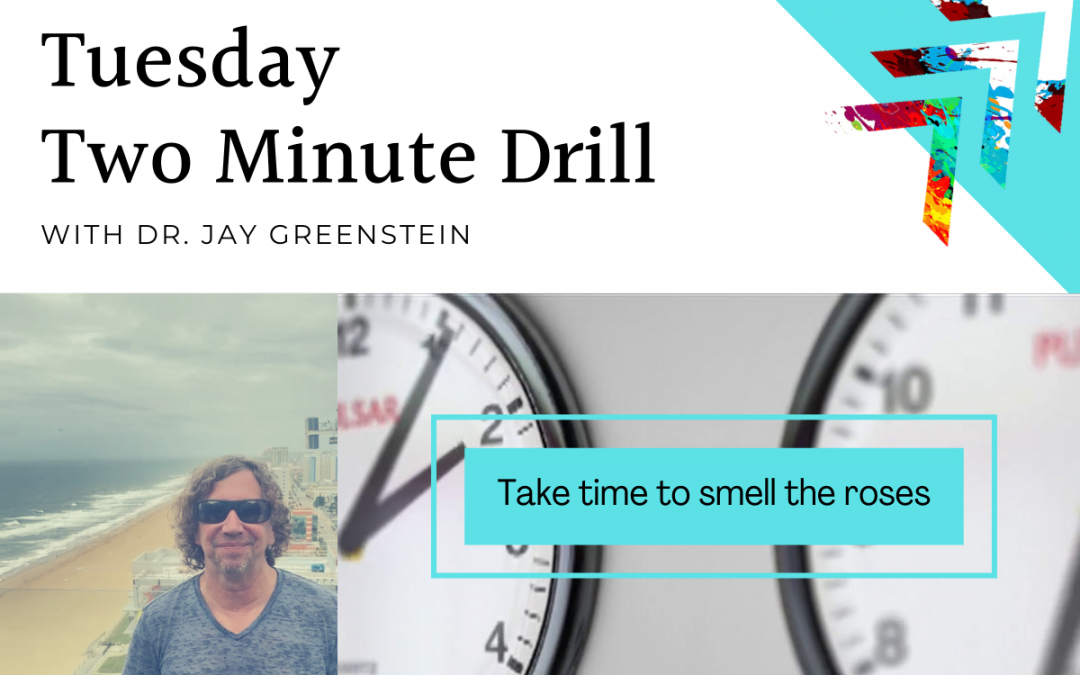
This week Dr. Jay is coming to you from Virginia Beach for the Two Minute Drill. His good friend Brad Cost is playing cameraman as they were attending the UVCA convention. In this week’s TMD we are talking about beauty and the need to celebrate achieving your goals.
Take time to celebrate
Look at this beautiful beach and beautiful ocean, at this amazing setting in Virginia Beach at the UVCA convention.
What Dr. Jay is trying to convey to you in today’s Two Minute Drill, is when things are beautiful, when you are doing great things, when you are achieving your goals, take time to celebrate.
One of the most intelligent brightest behavioral scientists, BJ Fogg, talks about the importance of celebrating victories and building great habits. So, every time you build a habit in your practice or your life, celebrate the fact that you have achieved the goal.
Take the time to smell the roses people!
Celebrate the victories and you will not only be happier, but you will build in even more great habits that achieve even greater levels of success.
That’s this week’s TMD. Head over to our Facebook page and let us know what you are celebrating this week.
Your questions and feedback are always welcome and appreciated!
Connect with us on Instagram or email us at [email protected]
This week Dr. Jay is traveling again, bringing you the Tuesday Two Minute Drill from Detroit, Michigan. In today’s TMD he is completing the circle on the discussion of self-discharges.
Patient goals
Today we are completing the circle on the discussion of self-discharges. We talked about the importance of tracking the ratio of self to doctor discharges. Then we talked about the importance of tracking the reasons why your patients self discharge from care. Now Dr. Jay is talking about how to move the needle to reduce the number of self discharges in your practice.
There are three steps to reduce the number of self discharges in your practice:
Make sure that somewhere on your intake paperwork or patient portal you have a spot for your patients to report what their goals of care are.
When you do your report of findings discuss their specific goals with them and make sure you share the vision-making with them. Also, at this time make sure you employ shared decision-making. This means when you tell them this is the treatment plan, this is the treatment we are going to employ, this is the frequency and duration of your care based on the evidence and my clinical experience, make sure they say yes I understand, yes I agree, yes this is going to help me achieve my goals.
When patients are coming in for regular visits and re-exam make sure you discuss what they believe their progress is toward their goals are. It’s not enough to just ask what is your pain level from 0-10. That’s not enough. You want to make sure you are also tracking their perceived progress toward their goal. So if they want to run a marathon, are they able to run a certain distance now that you’ve delivered a certain amount of care.
Tracking those goals that are important to your patient is critically important to reducing self-discharges. Employ these tactics to make sure your patients complete their care and get the best possible long-term outcome.
Head over to our Facebook page and let us know if you track this information already or how you are going to start tracking your patient’s goals.
Your questions and feedback are always welcome and appreciated!
Connect with us on Instagram or email us at [email protected]